【学术报告】Designing Intelligent Soft Materials Through Next-Generation Dynamic Crosslinker Chemistry and Self-Assembly
日期:2023-05-05
阅读:984
主题:Designing Intelligent Soft Materials Through Next-Generation Dynamic Crosslinker Chemistry and Self-Assembly
报告人:Professor Jonathan C. Barnes ,Department of Chemistry, Washington University, St. Louis, MO 63130, USA
时间:2023年5月5日(周五)14:00
地点:霞光楼220会议室
邀请人:颜徐州 研究员
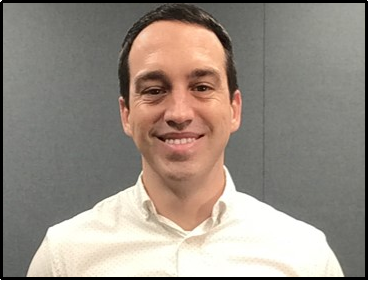
个人简介:
Synthetic polymers have played a significant role in society over the past century. The continued development of advanced polymerization techniques and new chemical designs has accelerated the pace at which materials have been produced. Traditionally, many commercial materials such as polyurethane foams, silicones, epoxy sealants, and rubber car tires have consisted of crosslinked polymer networks. Generally speaking, the crosslinkers used to hold these materials together are not dynamic after the network has been formed. Over the past few decades, chemists have sought to develop next-generation functional materials with emergent properties by envisioning the crosslinkers to be much more than just a static, covalent tether. Instead, so-called ‘intelligent’ or ‘smart’ materials have been achieved through molecular programming of the precursor components, such that they are able to ‘sense’ and respond to external environmental cues, like heat and light for example, or possess unique pathways of absorbing and dissipating external forces via dynamic, well-defined topologies.
My research group at Washington University in St. Louis (WashU) is focused on designing the next generation of dynamic and reconfigurable materials that simultaneously take advantage of covalent and non-covalent chemical bonding. Specifically, we design functional polymers and crosslinkers with supramolecular properties and/or precise topologies that adopt unique pathways of self-assembly and activation. Thus, we create functional materials through a bottom-up approach, i.e., nano to macroscale, to emulate Nature’s forms of molecular recognition or function, while simultaneously possessing the enhanced robustness and durability that is expected of next-generation synthetic materials.
In my talk, I will discuss (1) the synthesis of novel redox- and photoresponsive polymers and soft materials for applications in hydrogel actuators, visible-light photoredox patterning, drug delivery, and shear-thinning hydrogels, and (2) our journey into the impact the mechanical bond has on materials comprised of mechanically interlocked polymers and crosslinkers.
Bio:
Jonathan completed his B.S. and M.S. degrees in chemistry at the University of Kentucky in 2006. After working for a few years in industry for a biotech start-up company in Los Angeles, CA, Jonathan started his graduate studies in 2010 as a National Defense Science and Engineering Graduate Fellow at Northwestern University (NU) in Evanston, IL under the tutelage of Professor Fraser Stoddart (2016 Chemistry Nobel Laureate). While at NU, Jonathan developed a new class of stable organic radicals, as well as new macrocycles for binding polycyclic aromatic hydrocarbons. In 2014, Jonathan moved to the Massachusetts Institute of Technology as an HHMI postdoctoral fellow of the Life Sciences Research Foundation in Professor Jeremiah Johnson’s group, where he investigated new sequence-defined polymer methodologies and combination drug-loaded nanoparticles for cancer treatment. In 2016, he began his independent career at WUSTL where his group is focused on synthesizing new functional polymers to make redox-responsive photodynamic materials, targeted polymeric nanomaterials for drug combination therapies, and developing novel topologically complex polymers and materials influenced by the mechanical bond. Jonathan received a Packard Fellowship for Science and Engineering from the David and Lucile Packard Foundation and a Young Investigator Award from the Cancer Research Foundation in 2017. He was also named a 2019 Kavli Fellow by the Kavli Foundation and the U.S. National Academy of Sciences, as well as a 2020 Emerging Investigator by the journal Polymer Chemistry and a 2020 Young Investigator by the American Chemical Society's Division of Polymeric Materials: Science and Engineering. Beginning July 1st, 2023, Jonathan will start as an Associate Professor of Chemistry at WUSTL.
Links to Twitter and Lab Pages:


